Monday, 21 November 2016


How to Generate Electricity – How is Electricity Generated
Electricity is the energy made available by the flow of electric charge through a conductor. It is carried by wires or produced by batteries and is used to power machines. Electricity is lifeline of modern world. There are different types of electricity generated through renewable and non-renewable sources of energy.
What is Electricity?
Electricity is flow of electrons from one body to another. In order to understand this is some detail, it is important to understand the structure of an atom. An atom consists of three elements – electrons, protons and neutrons. Electrons are negatively charged (-) particles, protons are positively charged particles (+) and neutrons are neutrally charged or they have no charge. Example: A and B are two objects with 10 electrons and 10 protons each. Due to friction or any other reason, 2 electrons from the outer orbit of object A flows away to object B. Now there are 8 electrons in object A and 12 electrons in object B. The net result of this flow of electrons is that object B will get negatively charged due to excess electrons and object A will get positively charged because of deficit of electrons. This is how electricity is generated.
History of Electricity
In Physics, the law of conservation of energy states that energy can neither be created nor be destroyed. This means that in order to generate electricity, another kind of energy should be used as fuel.
- Thomas Seebeck (1770-1831): Discovered the “Seebeck Effect”.
- Michael Faraday (1791-1867): Electromagnetic induction. He also explained how electric currents works.
- James Maxwell (1831-1879): Translated Faraday’s theories into mathematical expressions.
- Thomas Alva Edison (1847-1931): Invented the electric bulb
- Nikola Tesla: Devised the polyphase alternating-current systems that form the modern electrical power industry.
- Otto Hahn (1879-1968): Explained the process of nuclear fission by which nuclei of atoms of heavy elements can break into smaller nuclei, in the process releasing large quantities of energy.
- Albert Einstein (1879-1955): Explained that one gram of mass can be converted into a torrential amount of energy
Modern day electricity is a result of all the hard work done by above mentioned great people.
Static Electricity
Static electricity is an electrical charge at rest. This is created by an imbalance of electrons that stay on a specific surface, or in the environmental air. The imbalance of electrons is caused by absence or surplus of electrons. This creates an electrical field that is capable of influencing other objects at a distance. Lightening is an example of static electricity.
Saturday, 19 November 2016
electronics assemblesd electronic history

Once the printed circuit board (PCB) is complete, electronic components must be assembled to form a functional printed circuitassembly, or PCA or PCBA (printed circuit board assembly).
In through-hole PCA, component leads are inserted in holes and thus the name Thru-Hole. In surface-mount PCA, components are placed on pads or lands on the outer surfaces of the PCB.
In both kinds of assembly (Thru-Hole and SMT), component leads are electrically and mechanically fixed to the board with solder. In case of Thru-Hole, solder wire or solder bar is used while in SMT, solder balls of solder paste is used.
electronics basement
Basic Electronics Tutorial : Lean the basics of electronics including electronics circuits, PCB (Printed Circuit Board), Electronics Design, Laws of Electronics. This article is designed for the beginner to electronics. The more experienced hobbyist will probably learn some new things as well, since there is a good deal of information here that most non-professionals will be unaware of.
Introduction to Electronics: 1745 in Leyden (Netherlands), discover the Leyden jar. The firstelectrical capacitor - a storage mechanism for an electrical charge. The first ones were a glass jar filled with water -two wires suspended in the water. Muschenbrock got such a shock out of the first jar he experimented with that he nearly died. Later, the water was replaced with metal foils wrapped so there was insulation between the layers of foil- the two wires are attached to the ends of the sheets of foil. This gave birth to Modern Electronics.
Definition of electronics: Electronics is the branch of science that deals with the study of flow and control of electrons (electricity) and the study of their behavior and effects in vacuums, gases, and semiconductors, and with devices using such electrons. This control of electrons is accomplished by devices that resist, carry, select, steer, switch, store, manipulate, and exploit the electron
Definition of electronics: Electronics is the branch of science that deals with the study of flow and control of electrons (electricity) and the study of their behavior and effects in vacuums, gases, and semiconductors, and with devices using such electrons. This control of electrons is accomplished by devices that resist, carry, select, steer, switch, store, manipulate, and exploit the electron
Soldering the electronics tech
All about soldering including, hand soldering, thru-hole soldering, SMD soldering, wave soldering selective soldering, RoHS, Lead-Free (Pb-Free), BGA Soldering and Rework, Desoldering, Solder Wire, Solder Flux, Solder Bar, Soldering Technology, How to Solder and more.

Soldering is accomplished by quickly heating the metal parts to be joined, and then applying a flux and a solder to the mating surfaces. The finished solder joint metallurgically bonds the parts forming an excellent electrical connection between wires and a strong mechanical joint between the metal parts. Heat is applied with a soldering iron or other means. The flux is a chemical cleaner which prepares the hot surfaces for the molten solder. The solder is a low melting point alloy of non ferrous metals.

Soldering is accomplished by quickly heating the metal parts to be joined, and then applying a flux and a solder to the mating surfaces. The finished solder joint metallurgically bonds the parts forming an excellent electrical connection between wires and a strong mechanical joint between the metal parts. Heat is applied with a soldering iron or other means. The flux is a chemical cleaner which prepares the hot surfaces for the molten solder. The solder is a low melting point alloy of non ferrous metals.
Electronics History - Origin and Development of History Electronic
Today in the twenty first century, many consumer, military, and recreational products are made with electronic devices. Perhaps, in the future we will see even more uses of Electronics. Almost all phases of modern technological society use Electronics, even this computer that is being used to type this script. The home, car, or the workplace all use Electronics. We all use Electronics but very few know the complex history behind Electronics. The purpose of this site is to explain the history, origin and development of Electronics.
It is important to know the History of Electronics (technology) so students better understand their electronic gadgets they use everyday on an increasing bases. That is, cell phones, ATMs, calculators, cars, fax machines, computers, copiers, radios, TV, etc.
To understand the interesting history of these electronic devices helps explain why science and technology are important, too. Without these technologies and electronics, our status in the world community would be diminished, therefore it is important to study the history of electronics, science and technology.
The historical approach to Electronics is a real task because of the tremendous amount of material that must be sorted through. Electronics is a vast sea of scientific information.
I will try my best to explain the origin, history and development of electronics here.
To understand the interesting history of these electronic devices helps explain why science and technology are important, too. Without these technologies and electronics, our status in the world community would be diminished, therefore it is important to study the history of electronics, science and technology.
The historical approach to Electronics is a real task because of the tremendous amount of material that must be sorted through. Electronics is a vast sea of scientific information.
I will try my best to explain the origin, history and development of electronics here.
Tuesday, 18 October 2016
Dish receiver technology
In order to take advantage of the hundreds of channels that a satellite dish has to offer, users must have a set-top box or receiver. This connects to the television and allows users to browse through the available programs. Dish Network is one of the top satellite providers in the US and offers several models of receivers for customers. The options range from basic set-top boxes for a single television to whole-home DVRs that allow people to record their favorite shows and watch them on any television in the house. When shopping for a new Dish Network satellite TV receiver, shoppers should look at the top models and what each has to offer to see which one best meets their needs.
motor electronic technology
An induction motor is an asynchronous AC motor where power is transferred to the rotor by electromagnetic induction, much like transformer action. An induction motor resembles a rotating transformer, because the stator (stationary part) is essentially the primary side of the transformer and the rotor (rotating part) is the secondary side. Polyphase induction motors are widely used in industry.
Induction motors may be further divided into Squirrel Cage Induction Motors and Wound Rotor Induction Motors. SCIMs have a heavy winding made up of solid bars, usually aluminum or copper, joined by rings at the ends of the rotor. When one considers only the bars and rings as a whole, they are much like an animal's rotating exercise cage, hence the name.
Currents induced into this winding provide the rotor magnetic field. The shape of the rotor bars determines the speed-torque characteristics. At low speeds, the current induced in the squirrel cage is nearly at line frequency and tends to be in the outer parts of the rotor cage. As the motor accelerates, the slip frequency becomes lower, and more current is in the interior of the winding. By shaping the bars to change the resistance of the winding portions in the interior and outer parts of the cage, effectively a variable resistance is inserted in the rotor circuit. However, the majority of such motors have uniform bars.
In a WRIM, the rotor winding is made of many turns of insulated wire and is connected to ring slips on the motor shaft. An external resistor or other control devices can be connected in the rotor circuit. Resistors allow control of the motor speed, although significant power is dissipated in the external resistance. A converter can be fed from the rotor circuit and return the slip-frequency power that would otherwise be wasted back into the power system through an inverter or separate motor-generator.
The WRIM is used primarily to start a high inertia load or a load that requires a very high starting torque across the full speed range. By correctly selecting the resistors used in the secondary resistance or slip ring starter, the motor is able to produce maximum torque at a relatively low supply current from zero speed to full speed. This type of motor also offers controllable speed.
Motor speed can be changed because the torque curve of the motor is effectively modified by the amount of resistance connected to the rotor circuit. Increasing the value of resistance will move the speed of maximum torque down. If the resistance connected to the rotor is increased beyond the point where the maximum torque occurs at zero speed, the torque will be further reduced.
When used with a load that has a torque curve that increases with speed, the motor will operate at the speed where the torque developed by the motor is equal to the load torque. Reducing the load will cause the motor to speed up, and increasing the load will cause the motor to slow down until the load and motor torque are equal. Operated in this manner, the slip losses are dissipated in the secondary resistors and can be very significant. The speed regulation and net efficiency is also very poor.
Solar power bank technology
Well, there are chances that you may not get electricity everywhere. So, there is a perfect alternative available which is nothing but the solar powered power bank. It is also called solar power battery bank which is a kind of power bank that works on solar energy, thus saving our earth’s resources.
In this post, I’ll let you know about the basics of solar powered power banks and its benefit. Apart from that, I’m going to list some top solar power battery bank so as to assist you to choose the best one suitable for your needs.
Solar Power Banks
I know that you must be wondering that how does a solar powered power bank works. It works on the same principle as solar lights works. In solar power bank, the sun energy is converted into electrical energy. A power bank solar uses the energy of speeding photons present in the sunlight, to create an electrical current.
The main advantage of using solar powered power bank is that by using them, you are doing your part in making the earth green and safe. Now, you might be puzzling which solar power bank is good and which one you should buy. Well, you don’t have to get worry as I’m gonna perform solar power bank review in this post.
Solar Power Bank review
No matter if it is a normal power bank or solar power battery bank, choosing the best can be a really difficult task. You need to see so many things like charging time, voltage, size, price etc. However, after doing a proper research, I have chosen 7 best solar power battery banks which can be considered for buying. These solar power banks are easily available on all major e-commerce websites.
7 Solar Panel Powered Power Bank Reviews
So, you may check the reviews of top 7 solar power banks now.
Waaree WEPCWS303 Solar Power Bank 5000mAh
The main beauty of this solar power battery bank is that it can be used as both power bank solar and as electric power bank. It can charge itself from electricity and from Sun as well. The device gets charged in 5 hours if done by electricity and takes 16 hours if done by Sunlight. It can charge two devices at a same time due to its dual output capability. This solar power battery bank has premium rubber finish and 3-LED rubber indicator to show the status of charging. It is available in black color only and comes with a 6 months manufacturer warranty.
Monday, 17 October 2016
The technology of bulb
What are LEDs?
LEDs, or light–emitting diodes, are semiconductor devices that produce visible light when an electrical current passed through them. LEDs are a type of Solid State Lighting (SSL), as are organic light–emitting diodes (OLEDs) and light–emitting polymers (LEPs).
How is LED lighting different than other light sources, such as incandescent and CFL?
LED lighting differs from incandescent and compact fluorescent lighting in several ways. When designed well, LED lighting can be more efficient, durable, versatile and longer lasting.
LED lighting products use light emitting diodes to produce light very efficiently. An electrical current passes through semiconductor material, which illuminates the tiny light sources we call LEDs. The heat produced is absorbed into a heat sink.
Common LED colors include amber, red, green, and blue. There is actually no such thing as a “white” LED. To get white light, the kind we use for lighting our homes and offices, different color LEDs are mixed or covered with a phosphor material that converts the color of the light. The phosphor is the yellow material you can see on some LED products. Colored LEDs are widely used as signal lights and indicator lights, like the power button on a computer.
LEDs are now being incorporated into bulbs and fixtures for general lighting applications. LEDs are small and provide unique design opportunities. Some LED bulb solutions may look like familiar light bulbs and some may not, but can better match the performance of traditional light bulbs. Some LED light fixtures may have LEDs built–in as a permanent light source.
LEDs are “directional” light sources, which means they emit light in a specific direction, unlike incandescent and compact fluorescent bulbs, which emit light and heat in all directions. For this reason, LED lighting is able to use light and energy more efficiently in many applications. However, it also means that sophisticated engineering is needed to produce an LED light bulb that shines light all around like an incandescent A-shape bulb.

LED bulbs that have earned the ENERGY STAR are subject to very specific requirements designed to replicate the experience you are used to with a standard A-type bulb, so they can be used for a wide variety of applications. As the graphic on the right demonstrates, a general purpose LED bulb that does not qualify for the ENERGY STAR may not distribute light in all directions and could prove to be a disappointment if used in a table lamp.
For more information on how to select an ENERGY STAR certified bulb for each application in your home, (PDF, 1.49 MB).
Incandescent bulbs produce light using electricity to heat a metal filament until it becomes “white” hot or is said to incandesce. As a result, incandescent bulbs release 90% of their energy as heat.
In a CFL, an electric current flows between electrodes at each end of a tube containing gases. This reaction produces ultraviolet (UV) light and heat. The UV light is transformed into visible light when it strikes a phosphor coating on the inside of the bulb.
The Basics of LED Lighting
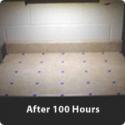
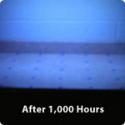
The useful life of LED lighting products is defined differently than that of other light sources, such as incandescent or CFL. This is because LEDs typically do not “burn out” or fail. Instead, they experience lumen depreciation, where the amount of light produced decreases and light color appearance can shift over time. Instead of basing the useful life of an LED product on the time it takes for 50% of a large group of lamps to burn out (as is the case with traditional sources), LED product “lifetime” is set based on a prediction of when the light output decreases 30 percent.
LEDs and Heat
Because LED lighting systems don’t radiate heat the way an incandescent or halogen light bulb does, the heat produced from the power going into the product must be drawn away from the LEDs. This is usually done with a heat sink, which is a passive device that absorbs the heat produced and dissipates it into the surrounding environment. This keeps LEDs from overheating and burning out. Thermal management is probably the single most important factor in the successful performance of an LED product over its lifetime because the higher the temperature at which the LEDs are operated, the more quickly the light will degrade, and the shorter the useful life will be.
After less than a year of use, a poorly designed LED product can flicker, shift in color, look dim, offer uneven light, or continue to use power when turned off, among other problems.
LED products use a variety of unique heat sink designs and configurations to manage heat, so they may look very different from each other. Regardless of the heat sink design, all LED products that have earned the ENERGY STAR have been tested to ensure that they properly manage the heat so that the light output is properly maintained through the end of its rated life.
Why should I choose ENERGY STAR certified LED lighting products?
There are more lighting choices available on store shelves than ever before. Even with all the new choices, it’s still simple – look for the ENERGY STAR label. ENERGY STAR means high quality and performance, particularly in the following areas:
- Color Quality
- 6 different requirements for color to ensure quality up front and over time
- Light Output
- Light output minimums to ensure you get enough light
- Light distribution requirements to ensure the light goes where you need it
- Guidelines for equivalency claims to take the guess-work out of replacement
- Peace of mind
- Verified compliance with more than 20 separate industry standards and procedures
- Long term testing to back up lifetime claims
- Testing to stress the products in operating environments similar to how you will use the product in your home
- 3 year minimum warranty requirement
And as all ENERGY STAR products, products are subject to random testing every year to ensure they continue to meet the ENERGY STAR requirements.
The technology of light
Light and Color
The Technology of Light
The Technology of Light
Fundamental Concepts:
Almost all of today’s common electric light sources may be categorized broadly as incandescent, fluorescent, high intensity discharge (HID) or LED. In order to understand the technology that allows each lamp type to produce light, it is important to review certain basic principles.
Almost all of today’s common electric light sources may be categorized broadly as incandescent, fluorescent, high intensity discharge (HID) or LED. In order to understand the technology that allows each lamp type to produce light, it is important to review certain basic principles.
Watts, Lumens and Efficacy:Many people think that a higher wattage lamp will always produce more light than a lower wattage one. This confuses light output, which is measured in lumens, with the electric power a lamp uses, which is measured in watts. In fact, a 20W compact fluorescent lamp can produce just as much usable light as a 75W incandescent lamp (and save a great deal of energy). The most common way to express the energy efficiency of a light source—is “efficacy”. Efficacy is the ratio of the number of lumens it produces to each watt of power it consumes. In today’s energy conscious world, a lamp’s lumens per watt (LPW) performance is one of its most critical characteristics.
Service Life and Lumen Maintenance:
The average rated service life of a lamp is based on the point in time when 50 percent of a large sample of those lamps will fail, or “burn out.” Many of today’s most sophisticated lamps offer an extremely long service life as well as exceptionally high color rendering. Lamps may cost more to purchase, but the additional expense can be offset by reduced energy costs and less frequent replacement. The light output of all lamps will deteriorate gradually over time. The rate of this deterioration —known as lumen maintenance— varies from lamp type to lamp type. It is particularly important to understand lumen maintenance and service life when selecting a lamp for a hard-to reach fixture where replacement is difficult.
The average rated service life of a lamp is based on the point in time when 50 percent of a large sample of those lamps will fail, or “burn out.” Many of today’s most sophisticated lamps offer an extremely long service life as well as exceptionally high color rendering. Lamps may cost more to purchase, but the additional expense can be offset by reduced energy costs and less frequent replacement. The light output of all lamps will deteriorate gradually over time. The rate of this deterioration —known as lumen maintenance— varies from lamp type to lamp type. It is particularly important to understand lumen maintenance and service life when selecting a lamp for a hard-to reach fixture where replacement is difficult.
System Efficacy:
Fluorescent and HID lamps require ballasts for operation, so the lamp(s) and ballast work together as a “system.” The efficacies of these systems must take into account the actual lumen output of the lamp(s), as well as the power drawn by both the lamp(s) and the ballast. The SYLVANIA System Solution™ is the optimum choice when planning a system. Lamp and ballast combinations are specifically designed to work together to provide high system efficacy.
Fluorescent and HID lamps require ballasts for operation, so the lamp(s) and ballast work together as a “system.” The efficacies of these systems must take into account the actual lumen output of the lamp(s), as well as the power drawn by both the lamp(s) and the ballast. The SYLVANIA System Solution™ is the optimum choice when planning a system. Lamp and ballast combinations are specifically designed to work together to provide high system efficacy.
Footcandles and Candlepower:
Two important measurements of light are frequently confused—footcandles and candlepower. "Footcandles" measure the light that falls on a surface (illuminance) in lumens per square foot. A footcandle minimum, for example, can be written into specifications based on the Illuminating Engineering Society of North America’s (IESNA) recommended light level for a particular room or task. "Candlepower", measures the intensity of a light source in a specific direction. Candlepower measurements are expressed in candelas and are independent of any object or surface that is being lit.
Two important measurements of light are frequently confused—footcandles and candlepower. "Footcandles" measure the light that falls on a surface (illuminance) in lumens per square foot. A footcandle minimum, for example, can be written into specifications based on the Illuminating Engineering Society of North America’s (IESNA) recommended light level for a particular room or task. "Candlepower", measures the intensity of a light source in a specific direction. Candlepower measurements are expressed in candelas and are independent of any object or surface that is being lit.
Point Source and Diffuse Source:
When selecting a lamp for a given application it is important to determine whether a point source or a diffuse source is more appropriate. A point source is a lamp or fixture that is relatively small compared to the area that it is, and has the potential to direct a concentrated beam of light on a specific surface or object. Incandescent, halogen, HID lamps and LEDs are typically used in point source applications. A diffuse source, on the other hand, is relatively large and spreads light over a wide area. Linear fluorescent lamps are the most common diffuse source.
When selecting a lamp for a given application it is important to determine whether a point source or a diffuse source is more appropriate. A point source is a lamp or fixture that is relatively small compared to the area that it is, and has the potential to direct a concentrated beam of light on a specific surface or object. Incandescent, halogen, HID lamps and LEDs are typically used in point source applications. A diffuse source, on the other hand, is relatively large and spreads light over a wide area. Linear fluorescent lamps are the most common diffuse source.
Beam Angle and Field Angle
The pattern of light delivered by reflector lamps—a popular point source—is often described in terms of beam angle and field angle. "Beam angle" is the smaller figure, and refers to that portion of the lamp’s beam where the candlepower is greater than 50 percent of the candlepower measured at the center of the beam. The "field angle" describes the larger area of the beam where the candlepower is greater than 10 percent of the center beam candlepower.
The pattern of light delivered by reflector lamps—a popular point source—is often described in terms of beam angle and field angle. "Beam angle" is the smaller figure, and refers to that portion of the lamp’s beam where the candlepower is greater than 50 percent of the candlepower measured at the center of the beam. The "field angle" describes the larger area of the beam where the candlepower is greater than 10 percent of the center beam candlepower.
Zong 4G fiber home device technology
Zong 4G fiber home device
Zong today announced the availability of its new 4G Mobile Broadband device that they are calling Fiber Home.
According to information available on Zong’s website, Fiber Home is going to be another wireless 4G MiFi device from the company that can be used with Zong’s Internet SIM for using Zong’s 3G and 4G services.
Users will be able to create a WiFi hotspot with this device and connect their laptops, phones, tabs and other wireless devices with Fiber Home for internet connectivity.
Zong’s Fiber Home device comes with a display screen to show battery status and estimated number of hours that users can avail without any power-source.
Fiber Home Specifications
Below are some of the specs of Zong Fiber Home device:
Below are some of the specs of Zong Fiber Home device:
Supported networks: 3G, 4G
Multiple Device connectivity:
Yes
10 devices can connect at a time
Battery:
Capacity: 2100mAh
Maximum Usage: 8 Hours
Standby Time: 40 Hours
Data Packages for Fiber Home
Zong is offer its below packages for Fiber Home Device:
Multiple Device connectivity:
Yes
10 devices can connect at a time
Battery:
Capacity: 2100mAh
Maximum Usage: 8 Hours
Standby Time: 40 Hours
Data Packages for Fiber Home
Zong is offer its below packages for Fiber Home Device:
Zong_MBB
Fiber Home Price
Zong is selling its Fiber Home device for Rs. 3,000.
This is the base price of device and doesn’t include any data package
You can avail 10% discount if you — are from Islamabad/Rawalpindi — and order this device online from here.
Zong is selling its Fiber Home device for Rs. 3,000.
This is the base price of device and doesn’t include any data package
You can avail 10% discount if you — are from Islamabad/Rawalpindi — and order this device online from here.
Solar power technology
Solar power
Solar power is the conversion of sunlight into electricity, either directly using photovoltaics (PV), or indirectly using concentrated solar power. Concentrated solar power systems (Unified Solar) use lenses or mirrors and tracking systems to focus a large area of sunlight into a small beam. Photovoltaic cells convert light into an electric current using the photovoltaic effect.[1]
The International Energy Agency projected in 2014 that under its "high renewables" scenario, by 2050, solar photovoltaics and concentrated solar power would contribute about 16 and 11 percent, respectively, of the worldwide electricity consumption, and solar would be the world's largest source of electricity. Most solar installations would be in China and India.[2]
Photovoltaics were initially solely used as a source of electricity for small and medium-sized applications, from the calculator powered by a single solar cell to remote homes powered by an off-grid rooftop PV system. As the cost of solar electricity has fallen, the number of grid-connected solar PV systems has grown into the millions and utility-scale solar power stations with hundreds of megawatts are being built. Solar PV is rapidly becoming an inexpensive, low-carbon technology to harness renewable energy from the Sun.
Commercial concentrated solar power plants were first developed in the 1980s. The 392 MW Ivanpah installation is the largest concentrating solar power plant in the world, located in the Mojave Desert of California.
Contents
Mainstream technologies Edit
Mainstream technologies Edit
Many industrialized nations have installed significant solar power capacity into their grids to supplement or provide an alternative to conventional energy sources while an increasing number of less developed nations have turned to solar to reduce dependence on expensive imported fuels (see solar power by country). Long distance transmission allows remote renewable energy resources to displace fossil fuel consumption. Solar power plants use one of two technologies:
Photovoltaic (PV) systems use solar panels, either on rooftops or in ground-mounted solar farms, converting sunlight directly into electric power.
Concentrated solar power (CSP, also known as "concentrated solar thermal") plants use solar thermal energy to make steam, that is thereafter converted into electricity by a turbine.
Photovoltaics Edit
Main article: Photovoltaics
Concentrated solar power (CSP, also known as "concentrated solar thermal") plants use solar thermal energy to make steam, that is thereafter converted into electricity by a turbine.
Photovoltaics Edit
Main article: Photovoltaics
Schematics of a grid-connected residential PV power system[3]
A solar cell, or photovoltaic cell (PV), is a device that converts light into electric current using the photovoltaic effect. The first solar cell was constructed by Charles Fritts in the 1880s.[4] The German industrialist Ernst Werner von Siemens was among those who recognized the importance of this discovery.[5] In 1931, the German engineer Bruno Lange developed a photo cell using silver selenide in place of copper oxide,[6] although the prototype selenium cells converted less than 1% of incident light into electricity. Following the work of Russell Ohl in the 1940s, researchers Gerald Pearson, Calvin Fuller and Daryl Chapin created the silicon solar cell in 1954.[7] These early solar cells cost 286 USD/watt and reached efficiencies of 4.5–6%.[8]
A solar cell, or photovoltaic cell (PV), is a device that converts light into electric current using the photovoltaic effect. The first solar cell was constructed by Charles Fritts in the 1880s.[4] The German industrialist Ernst Werner von Siemens was among those who recognized the importance of this discovery.[5] In 1931, the German engineer Bruno Lange developed a photo cell using silver selenide in place of copper oxide,[6] although the prototype selenium cells converted less than 1% of incident light into electricity. Following the work of Russell Ohl in the 1940s, researchers Gerald Pearson, Calvin Fuller and Daryl Chapin created the silicon solar cell in 1954.[7] These early solar cells cost 286 USD/watt and reached efficiencies of 4.5–6%.[8]
Conventional PV systems Edit
The array of a photovoltaic power system, or PV system, produces direct current (DC) power which fluctuates with the sunlight's intensity. For practical use this usually requires conversion to certain desired voltages or alternating current (AC), through the use of inverters.[3] Multiple solar cells are connected inside modules. Modules are wired together to form arrays, then tied to an inverter, which produces power at the desired voltage, and for AC, the desired frequency/phase.[3]
The array of a photovoltaic power system, or PV system, produces direct current (DC) power which fluctuates with the sunlight's intensity. For practical use this usually requires conversion to certain desired voltages or alternating current (AC), through the use of inverters.[3] Multiple solar cells are connected inside modules. Modules are wired together to form arrays, then tied to an inverter, which produces power at the desired voltage, and for AC, the desired frequency/phase.[3]
Many residential PV systems are connected to the grid wherever available, especially in developed countries with large markets.[9] In these grid-connected PV systems, use of energy storage is optional. In certain applications such as satellites, lighthouses, or in developing countries, batteries or additional power generators are often added as back-ups. Such stand-alone power systems permit operations at night and at other times of limited sunlight.
Concentrated solar power Edit
Main article: Concentrated solar power
Main article: Concentrated solar power
A parabolic collector concentrates sunlight onto a tube in its focal point.
Concentrated solar power (CSP), also called "concentrated solar thermal", uses lenses or mirrors and tracking systems to focus a large area of sunlight into a small beam. Contrary to photovoltaics – which converts light directly into electricity – CSP uses the heat of the sun's radiation to generate electricity from conventional steam-driven turbines.
Concentrated solar power (CSP), also called "concentrated solar thermal", uses lenses or mirrors and tracking systems to focus a large area of sunlight into a small beam. Contrary to photovoltaics – which converts light directly into electricity – CSP uses the heat of the sun's radiation to generate electricity from conventional steam-driven turbines.
A wide range of concentrating technologies exists: among the best known are the parabolic trough, the compact linear Fresnel reflector, the Stirling dish and the solar power tower. Various techniques are used to track the sun and focus light. In all of these systems a working fluid is heated by the concentrated sunlight, and is then used for power generation or energy storage.[10] Thermal storage efficiently allows up to 24-hour electricity generation.[11]
A parabolic trough consists of a linear parabolic reflector that concentrates light onto a receiver positioned along the reflector's focal line. The receiver is a tube positioned right above the middle of the parabolic mirror and is filled with a working fluid. The reflector is made to follow the sun during daylight hours by tracking along a single axis. Parabolic trough systems provide the best land-use factor of any solar technology.[12] The SEGS plants in California and Acciona's Nevada Solar One near Boulder City, Nevada are representatives of this technology.[13][14]
Compact Linear Fresnel Reflectors are CSP-plants which use many thin mirror strips instead of parabolic mirrors to concentrate sunlight onto two tubes with working fluid. This has the advantage that flat mirrors can be used which are much cheaper than parabolic mirrors, and that more reflectors can be placed in the same amount of space, allowing more of the available sunlight to be used. Concentrating linear fresnel reflectors can be used in either large or more compact plants.[15][16]
The Stirling solar dish combines a parabolic concentrating dish with a Stirling engine which normally drives an electric generator. The advantages of Stirling solar over photovoltaic cells are higher efficiency of converting sunlight into electricity and longer lifetime. Parabolic dish systems give the highest efficiency among CSP technologies.[17] The 50 kW Big Dish in Canberra, Australia is an example of this technology.[13]
A solar power tower uses an array of tracking reflectors (heliostats) to concentrate light on a central receiver atop a tower. Power towers are more cost effective, offer higher efficiency and better energy storage capability among CSP technologies.[13] The PS10 Solar Power Plant and PS20 solar power plant are examples of this technology.
Hybrid systems Edit
A hybrid system combines (C)PV and CSP with one another or with other forms of generation such as diesel, wind and biogas. The combined form of generation may enable the system to modulate power output as a function of demand or at least reduce the fluctuating nature of solar power and the consumption of non renewable fuel. Hybrid systems are most often found on islands.
CPV/CSP system
A novel solar CPV/CSP hybrid system has been proposed, combining concentrator photovoltaics with the non-PV technology of concentrated solar power, or also known as concentrated solar thermal.[18]
ISCC system
The Hassi R'Mel power station in Algeria, is an example of combining CSP with a gas turbine, where a 25-megawatt CSP-parabolic trough array supplements a much larger 130 MW combined cycle gas turbine plant. Another example is the Yazd power station in Iran.
PVT system
Hybrid PV/T), also known as photovoltaic thermal hybrid solar collectors convert solar radiation into thermal and electrical energy. Such a system combines a solar (PV) module with a solar thermal collector in an complementary way.
CPVT system
A concentrated photovoltaic thermal hybrid (CPVT) system is similar to a PVT system. It uses concentrated photovoltaics (CPV) instead of conventional PV technology, and combines it with a solar thermal collector.
PV diesel system
It combines a photovoltaic system with a diesel generator.[19] Combinations with other renewables are possible and include wind turbines.[20]
PV-thermoelectric system
Thermoelectric, or "thermovoltaic" devices convert a temperature difference between dissimilar materials into an electric current. Solar cells use only the high frequency part of the radiation, while the low frequency heat energy is wasted. Several patents about the use of thermoelectric devices in tandem with solar cells have been filed.[21] The idea is to increase the efficiency of the combined solar/thermoelectric system to convert the solar radiation into useful electricity.
Development and deployment Edit
A hybrid system combines (C)PV and CSP with one another or with other forms of generation such as diesel, wind and biogas. The combined form of generation may enable the system to modulate power output as a function of demand or at least reduce the fluctuating nature of solar power and the consumption of non renewable fuel. Hybrid systems are most often found on islands.
CPV/CSP system
A novel solar CPV/CSP hybrid system has been proposed, combining concentrator photovoltaics with the non-PV technology of concentrated solar power, or also known as concentrated solar thermal.[18]
ISCC system
The Hassi R'Mel power station in Algeria, is an example of combining CSP with a gas turbine, where a 25-megawatt CSP-parabolic trough array supplements a much larger 130 MW combined cycle gas turbine plant. Another example is the Yazd power station in Iran.
PVT system
Hybrid PV/T), also known as photovoltaic thermal hybrid solar collectors convert solar radiation into thermal and electrical energy. Such a system combines a solar (PV) module with a solar thermal collector in an complementary way.
CPVT system
A concentrated photovoltaic thermal hybrid (CPVT) system is similar to a PVT system. It uses concentrated photovoltaics (CPV) instead of conventional PV technology, and combines it with a solar thermal collector.
PV diesel system
It combines a photovoltaic system with a diesel generator.[19] Combinations with other renewables are possible and include wind turbines.[20]
PV-thermoelectric system
Thermoelectric, or "thermovoltaic" devices convert a temperature difference between dissimilar materials into an electric current. Solar cells use only the high frequency part of the radiation, while the low frequency heat energy is wasted. Several patents about the use of thermoelectric devices in tandem with solar cells have been filed.[21] The idea is to increase the efficiency of the combined solar/thermoelectric system to convert the solar radiation into useful electricity.
Development and deployment Edit
Electronics system technology
Electronics system
Electronics is the science of controlling electrical energy electrically, in which the electrons have a fundamental role. Electronics deals with electrical circuits that involve active electrical components such as vacuum tubes, transistors, diodes, integrated circuits, associated passive electrical components, and interconnection technologies. Commonly, electronic devices contain circuitry consisting primarily or exclusively of active semiconductors supplemented with passive elements; such a circuit is described as an electronic circuit.
The science of Electronics is also considered to be a branch of Physics and Electrical Engineering.[1]
The nonlinear behaviour of active components and their ability to control electron flows makes amplification of weak signals possible, and electronics is widely used in information processing, telecommunication, and signal processing. The ability of electronic devices to act as switches makes digital information processing possible. Interconnection technologies such as circuit boards, electronics packaging technology, and other varied forms of communication infrastructure complete circuit functionality and transform the mixed components into a regular working system.
Electronics is distinct from electrical and electro-mechanical science and technology, which deal with the generation, distribution, switching, storage, and conversion of electrical energy to and from other energy forms using wires, motors, generators, batteries, switches, relays, transformers, resistors, and other passive components. This distinction started around 1906 with the invention by Lee De Forest of the triode, which made electrical amplification of weak radio signals and audio signals possible with a non-mechanical device. Until 1950 this field was called "radio technology" because its principal application was the design and theory of radio transmitters, receivers, and vacuum tubes.
Today, most electronic devices use semiconductor components to perform electron control. The study of semiconductor devices and related technology is considered a branch of solid-state physics, whereas the design and construction of electronic circuits to solve practical problems come under electronics engineering. This article focuses on engineering aspects of electronics.
Communication defination
Communication defination
Full Definition of communication
1
: an act or instance of transmitting
2
a : information transmitted or conveyed
b : a verbal or written message
3
a : a process by which information is exchanged between individuals through a common system of symbols, signs, or behavior <the function of pheromones in insect communication>; also : exchange of information
b : personal rapport <a lack of communication between old and young persons>
4
plural
a : a system (as of telephones) for transmitting or exchanging information
b : a system of routes for moving troops, supplies, and vehicles
c : personnel engaged in transmitting or exchanging information
5
plural but sing or plural in constr
a : a technique for expressing ideas effectively (as in speech)
b : the technology of the transmission of information (as by print or telecommunication)
1
: an act or instance of transmitting
2
a : information transmitted or conveyed
b : a verbal or written message
3
a : a process by which information is exchanged between individuals through a common system of symbols, signs, or behavior <the function of pheromones in insect communication>; also : exchange of information
b : personal rapport <a lack of communication between old and young persons>
4
plural
a : a system (as of telephones) for transmitting or exchanging information
b : a system of routes for moving troops, supplies, and vehicles
c : personnel engaged in transmitting or exchanging information
5
plural but sing or plural in constr
a : a technique for expressing ideas effectively (as in speech)
b : the technology of the transmission of information (as by print or telecommunication)
Mobile electronics technology
Mobiles electronics
Mobile Electronic Certified Professional
Mobile Electronic Certified Professional Program
Type
Certificate
Industry Electronics
Founded 1991
Headquarters Arlington, Virginia, United States
Parent Consumer Electronics Association
Website www.mecp.com/Home.aspx
The Mobile Electronic Certified Professional (MECP) is a certificate of achievement program in the United States that it is managed and administered by the Consumer Electronics Association (CEA).[1] The purpose of this certification is to ensure that individuals who install after-market electronics into vehicles and other vessels (such as aircraft or watercraft) do so in a consistent, safe, and reliable manner. Designed for mobile electronics installers, MECP certification training teaches the theory and practice of the 12-volt electronics industry. Exam questions and course content focus on "real-world" scenarios such as "eliminating noise, selecting proper gauge wires, determining ground locations and dealing with customer issues."[2] Major organizations such as Best Buy subsidiary Geek Squad has adopted the MECP into its job requirements.[3] There are four levels of certification offered through CEA, including three technical certifications of varying degrees, and one sales certification.[4]
Mobile Electronic Certified Professional Program
Type
Certificate
Industry Electronics
Founded 1991
Headquarters Arlington, Virginia, United States
Parent Consumer Electronics Association
Website www.mecp.com/Home.aspx
The Mobile Electronic Certified Professional (MECP) is a certificate of achievement program in the United States that it is managed and administered by the Consumer Electronics Association (CEA).[1] The purpose of this certification is to ensure that individuals who install after-market electronics into vehicles and other vessels (such as aircraft or watercraft) do so in a consistent, safe, and reliable manner. Designed for mobile electronics installers, MECP certification training teaches the theory and practice of the 12-volt electronics industry. Exam questions and course content focus on "real-world" scenarios such as "eliminating noise, selecting proper gauge wires, determining ground locations and dealing with customer issues."[2] Major organizations such as Best Buy subsidiary Geek Squad has adopted the MECP into its job requirements.[3] There are four levels of certification offered through CEA, including three technical certifications of varying degrees, and one sales certification.[4]
References Edit
^ "Mobile Electronics Certified Professional - My Site". mecp.com.
^ "Training". Consume Electronics Association. Retrieved 10 July 2012.
^ "MECP Advanced Certified". geeksquad.com.
^ "Mobile Electronics Certified Professional - My Site". mecp.com.
Last edited 6 months ago by Hooperbloob
Wikipedia®
^ "Training". Consume Electronics Association. Retrieved 10 July 2012.
^ "MECP Advanced Certified". geeksquad.com.
^ "Mobile Electronics Certified Professional - My Site". mecp.com.
Last edited 6 months ago by Hooperbloob
Wikipedia®
Content is available under CC BY-SA 3.0 unless otherwise noted.
Terms of UsePrivacyDesktop
Terms of UsePrivacyDesktop
Computer history electronics technology
Computer history (Electronics)
The computer was born not for entertainment or email but out of a need to solve a serious number-crunching crisis. By 1880, the U.S. population had grown so large that it took more than seven years to tabulate the U.S. Census results. The government sought a faster way to get the job done, giving rise to punch-card based computers that took up entire rooms.
Today, we carry more computing power on our smartphones than was available in these early models. The following brief history of computing is a timeline of how computers evolved from their humble beginnings to the machines of today that surf the Internet, play games and stream multimedia in addition to crunching numbers.
1801: In France, Joseph Marie Jacquard invents a loom that uses punched wooden cards to automatically weave fabric designs. Early computers would use similar punch cards.
Advertisement
1822: English mathematician Charles Babbage conceives of a steam-driven calculating machine that would be able to compute tables of numbers. The project, funded by the English government, is a failure. More than a century later, however, the world’s first computer was actually built.
1890: Herman Hollerith designs a punch card system to calculate the 1880 census, accomplishing the task in just three years and saving the government $5 million. He establishes a company that would ultimately become IBM.
1936: Alan Turing presents the notion of a universal machine, later called the Turing machine, capable of computing anything that is computable. The central concept of the modern computer was based on his ideas.
1937: J.V. Atanasoff, a professor of physics and mathematics at Iowa State University, attempts to build the first computer without gears, cams, belts or shafts.
1941: Atanasoff and his graduate student, Clifford Berry, design a computer that can solve 29 equations simultaneously. This marks the first time a computer is able to store information on its main memory.
1943-1944: Two University of Pennsylvania professors, John Mauchly and J. Presper Eckert, build the Electronic Numerical Integrator and Calculator (ENIAC). Considered the grandfather of digital computers, it fills a 20-foot by 40-foot room and has 18,000 vacuum tubes.
1946: Mauchly and Presper leave the University of Pennsylvania and receive funding from the Census Bureau to build the UNIVAC, the first commercial computer for business and government applications.
1947: William Shockley, John Bardeen and Walter Brattain of Bell Laboratories invent the transistor. They discovered how to make an electric switch with solid materials and no need for a vacuum.
1953: Grace Hopper develops the first computer language, which eventually becomes known as COBOL. Thomas Johnson Watson Jr., son of IBM CEO Thomas Johnson Watson Sr., conceives the IBM 701 EDPM to help the United Nations keep tabs on Korea during the war.
1954: The FORTRAN programming language is born.
1958: Jack Kilby and Robert Noyce unveil the integrated circuit, known as the computer chip. Kilby was awarded the Nobel Prize in Physics in 2000 for his work.
1964: Douglas Engelbart shows a prototype of the modern computer, with a mouse and a graphical user interface (GUI). This marks the evolution of the computer from a specialized machine for scientists and mathematicians to technology that is more accessible to the general public.
1969: A group of developers at Bell Labs produce UNIX, an operating system that addressed compatibility issues. Written in the C programming language, UNIX was portable across multiple platforms and became the operating system of choice among mainframes at large companies and government entities. Due to the slow nature of the system, it never quite gained traction among home PC users.
1970: The newly formed Intel unveils the Intel 1103, the first Dynamic Access Memory (DRAM) chip.
1971: Alan Shugart leads a team of IBM engineers who invent the “floppy disk,” allowing data to be shared among computers.
1973: Robert Metcalfe, a member of the research staff for Xerox, develops Ethernet for connecting multiple computers and other hardware.
1974-1977: A number of personal computers hit the market, including Scelbi & Mark-8 Altair, IBM 5100, RadioShack’s TRS-80 —affectionately known as the “Trash 80” — and the Commodore PET.
1975: The January issue of Popular Electronics magazine features the Altair 8080, described as the "world's first minicomputer kit to rival commercial models." Two "computer geeks," Paul Allen and Bill Gates, offer to write software for the Altair, using the new BASIC language. On April 4, after the success of this first endeavor, the two childhood friends form their own software company, Microsoft.
1976: Steve Jobs and Steve Wozniak start Apple Computers on April Fool’s Day and roll out the Apple I, the first computer with a single-circuit board.
The TRS-80, introduced in 1977, was one of the first machines whose documentation was intended for non-geeks
The TRS-80, introduced in 1977, was one of the first machines whose documentation was intended for non-geeks
Credit: Radioshack
1977: Radio Shack's initial production run of the TRS-80 was just 3,000. It sold like crazy. For the first time, non-geeks could write programs and make a computer do what they wished.
The TRS-80, introduced in 1977, was one of the first machines whose documentation was intended for non-geeks
Credit: Radioshack
1977: Radio Shack's initial production run of the TRS-80 was just 3,000. It sold like crazy. For the first time, non-geeks could write programs and make a computer do what they wished.
1977: Jobs and Wozniak incorporate Apple and show the Apple II at the first West Coast Computer Faire. It offers color graphics and incorporates an audio cassette drive for storage.
1978: Accountants rejoice at the introduction of VisiCalc, the first computerized spreadsheet program.
1979: Word processing becomes a reality as MicroPro International releases WordStar.
The first IBM personal computer, introduced on Aug. 12, 1981, used the MS-DOS operating system.
The first IBM personal computer, introduced on Aug. 12, 1981, used the MS-DOS operating system.
Credit: IBM
1981: The first IBM personal computer, code-named “Acorn,” is introduced. It uses Microsoft’s MS-DOS operating system. It has an Intel chip, two floppy disks and an optional color monitor. Sears & Roebuck and Computerland sell the machines, marking the first time a computer is available through outside distributors. It also popularizes the term PC.
The first IBM personal computer, introduced on Aug. 12, 1981, used the MS-DOS operating system.
Credit: IBM
1981: The first IBM personal computer, code-named “Acorn,” is introduced. It uses Microsoft’s MS-DOS operating system. It has an Intel chip, two floppy disks and an optional color monitor. Sears & Roebuck and Computerland sell the machines, marking the first time a computer is available through outside distributors. It also popularizes the term PC.
1983: Apple’s Lisa is the first personal computer with a GUI. It also features a drop-down menu and icons. It flops but eventually evolves into the Macintosh. The Gavilan SC is the first portable computer with the familiar flip form factor and the first to be marketed as a “laptop.”
1985: Microsoft announces Windows, its response to Apple’s GUI. Commodore unveils the Amiga 1000, which features advanced audio and video capabilities.
1985: The first dot-com domain name is registered on March 15, years before the World Wide Web would mark the formal beginning of Internet history. The Symbolics Computer Company, a small Massachusetts computer manufacturer, registers Symbolics.com. More than two years later, only 100 dot-coms had been registered.
1986: Compaq brings the Deskpro 386 to market. Its 32-bit architecture provides as speed comparable to mainframes.
1990: Tim Berners-Lee, a researcher at CERN, the high-energy physics laboratory in Geneva, develops HyperText Markup Language (HTML), giving rise to the World Wide Web.
1993: The Pentium microprocessor advances the use of graphics and music on PCs.
1994: PCs become gaming machines as "Command & Conquer," "Alone in the Dark 2," "Theme Park," "Magic Carpet," "Descent" and "Little Big Adventure" are among the games to hit the market.
1996: Sergey Brin and Larry Page develop the Google search engine at Stanford University.
1997: Microsoft invests $150 million in Apple, which was struggling at the time, ending Apple’s court case against Microsoft in which it alleged that Microsoft copied the “look and feel” of its operating system.
1999: The term Wi-Fi becomes part of the computing language and users begin connecting to the Internet without wires.
2001: Apple unveils the Mac OS X operating system, which provides protected memory architecture and pre-emptive multi-tasking, among other benefits. Not to be outdone, Microsoft rolls out Windows XP, which has a significantly redesigned GUI.
2003: The first 64-bit processor, AMD’s Athlon 64, becomes available to the consumer market.
2004: Mozilla’s Firefox 1.0 challenges Microsoft’s Internet Explorer, the dominant Web browsers. Facebook, a social networking site, launches.
2005: YouTube, a video sharing service, is founded. Google acquires Android, a Linux-based mobile phone operating system.
2006: Apple introduces the MacBook Pro, its first Intel-based, dual-core mobile computer, as well as an Intel-based iMac. Nintendo’s Wii game console hits the market.
2007: The iPhone brings many computer functions to the smartphone.
2009: Microsoft launches Windows 7, which offers the ability to pin applications to the taskbar and advances in touch and handwriting recognition, among other features.
2010: Apple unveils the iPad, changing the way consumers view media and jumpstarting the dormant tablet computer segment.
2011: Google releases the Chromebook, a laptop that runs the Google Chrome OS.
2012: Facebook gains 1 billion users on October 4.
2015: Apple releases the Apple Watch. Microsoft releases Windows 10.
Subscribe to:
Posts (Atom)